By — Dilip Guha
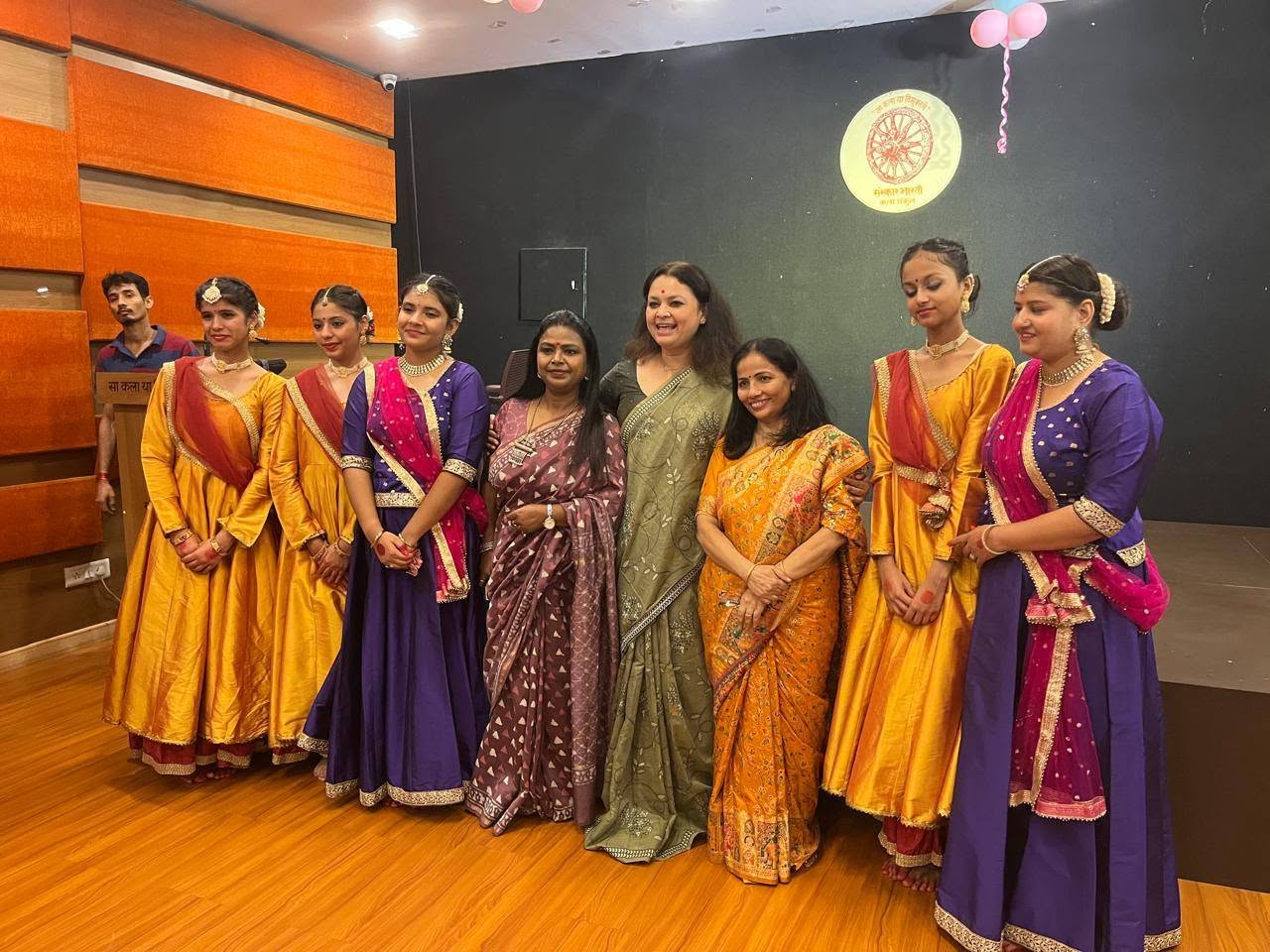
Kala Sankul of Sanskar Bharati Delhi witnessed a vibrant confluence of Indian art and cultural traditions over the past week, bringing together classical music and Kathak, folk and traditional art forms, and contemporary artistic expressions rooted in India’s cultural and spiritual heritage, held at their premises on Deen Dayal Upadhyay Marg, New Delhi.
On September 27, an art seminar and cultural programme on the theme “Contemporary Kathak from an Indian Perspective: Tradition, Innovation and Expression” was organised at Kala Sankul. Renowned Kathak exponent Gauri Diwakar shared her experiences and insights on the classical discipline of Kathak, its traditional framework and the evolving forms of expression in contemporary times. The programme also featured a classical vocal recital and a Kathak presentation by the Preeti Sinha group.
On September 26, the Visual Arts Vidya of Sanskar Bharati organised the “Rang Manjusha” exhibition dedicated to folk and traditional art. The exhibition was inaugurated by Dr. Vinod Narayan Indurkar, Chairman, CCRT. Featuring the works of 33 artists, the exhibition showcases diverse Indian folk and traditional art forms including Madhubani, Warli, Gond, Pichwai, Phad, Sujani and Manjusha. The artworks reflect the richness of India’s folk traditions, cultural memories and diverse artistic heritage. The exhibition will remain open to visitors at Kala Sankul until September 30.
As part of the same cultural continuum, the solo exhibition “ETERNAL ECHOES” by artist Pankaj Sachdeva was held at the AIFACS Gallery from September 19 to 24. The exhibition presented themes drawn from the Ramayana, Mahabharata, Shiva-Shakti, Buddha, Mahavira, Sikh philosophy and India’s spiritual traditions through a contemporary symbolic visual language. His works sought to bring forth Indian perspectives on life, spirituality and human values through the medium of painting.
What set these programmes apart was the way tradition was not treated merely as heritage to be preserved, but as a living stream—constantly engaging with the present through dialogue and creative expression. The convergence of classical arts, folk traditions, and contemporary practices underscored the growing role of Kala Sankul as a dynamic cultural space, where the roots of Indian art and its evolving expressions can be experienced together.
Kala Sankul is steadily emerging as a vibrant platform for artists, art practitioners and art lovers, fostering the continuous dialogue, preservation and creative expression of India’s rich artistic and cultural heritage.

